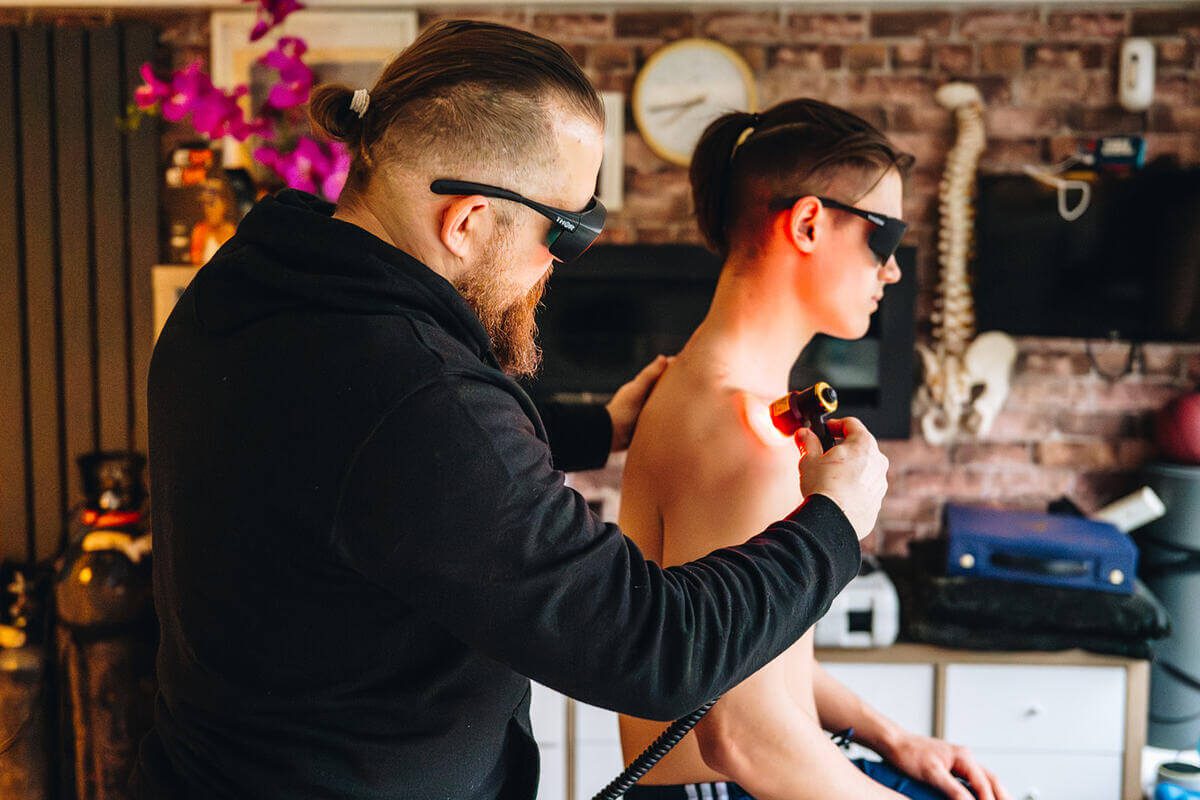



You’ve probably heard of shockwave therapy – maybe your physio mentioned it, maybe you saw it online. It sounds intense, but it’s actually one of the best tools we have for injuries that just won’t heal. My name’s Peter, and at Peter’s Physiotherapy, I use shockwave therapy to help Glasgow residents finally get past pain that hasn’t responded to anything else.
If you’re searching for shockwave therapy in Glasgow, you’ve found the right place. Let me explain exactly what it is, how it works, and whether it might be the answer you’ve been looking for. No confusing medical jargon, just straight talk about getting you better.
What Is Shockwave Therapy (And Why Does It Sound So Scary?)
Let’s get this out of the way first – the name sounds dramatic, but shockwave therapy isn’t as intense as it sounds. There’s no electricity, no actual “shocking,” and definitely no surgery involved.
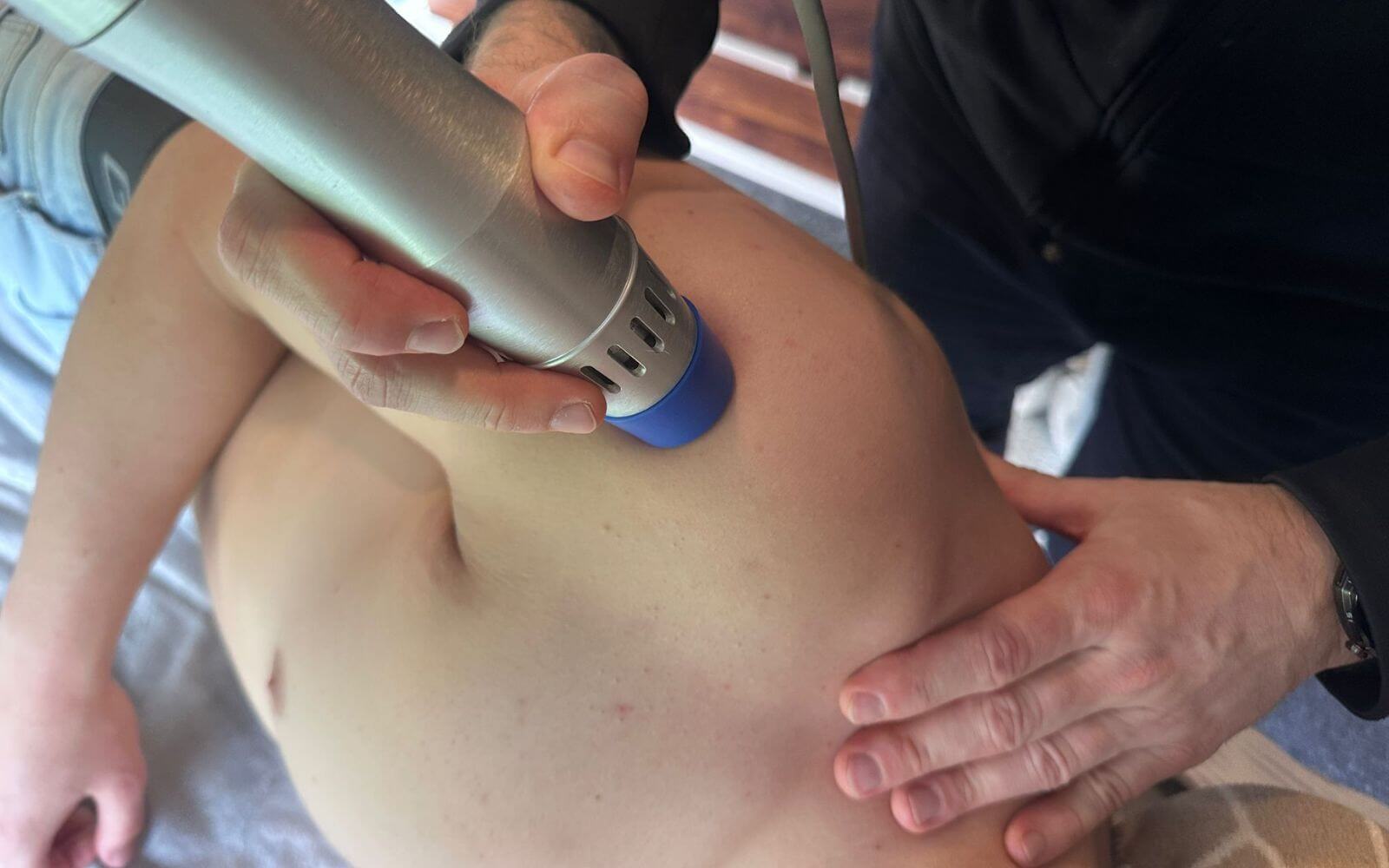
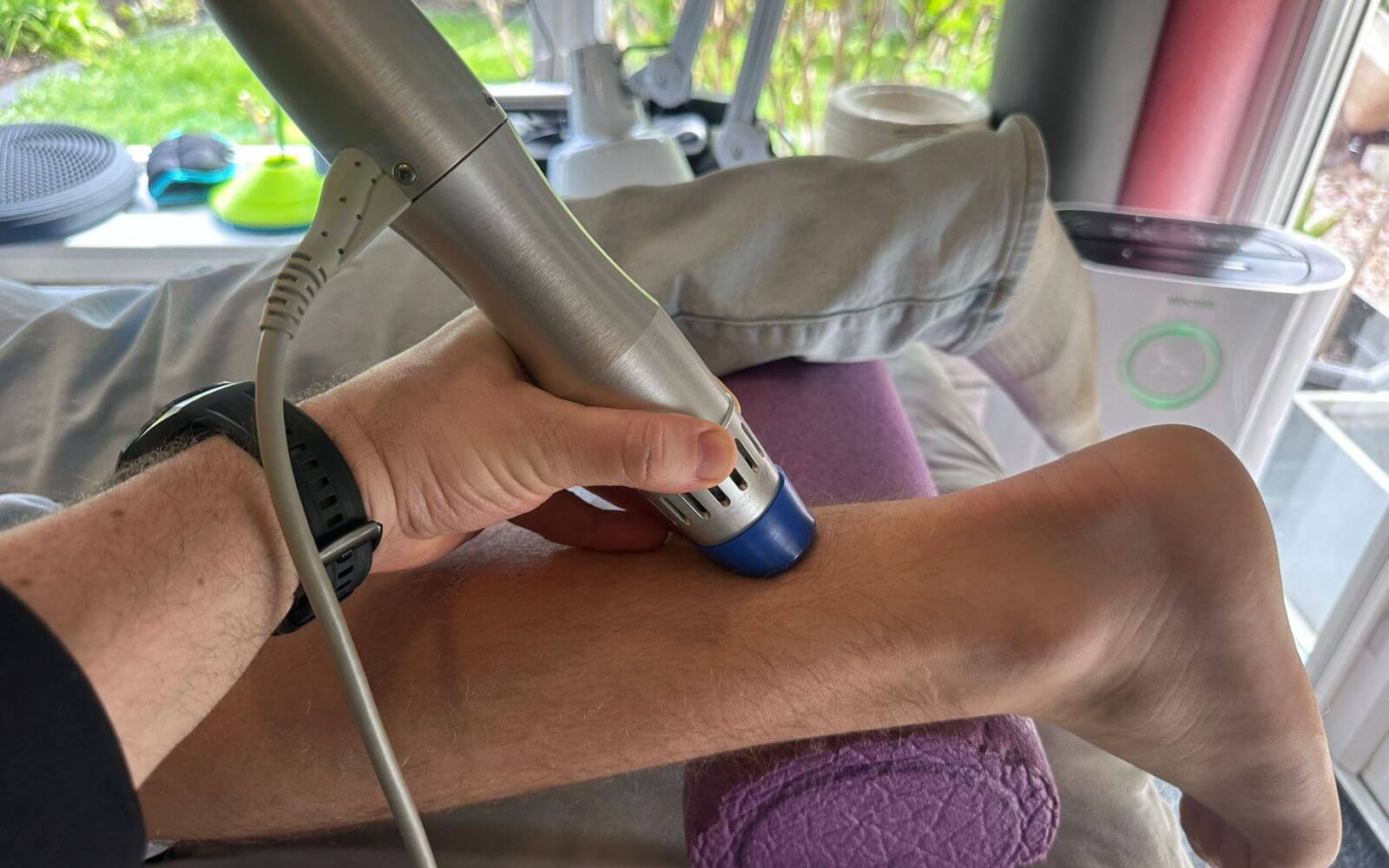
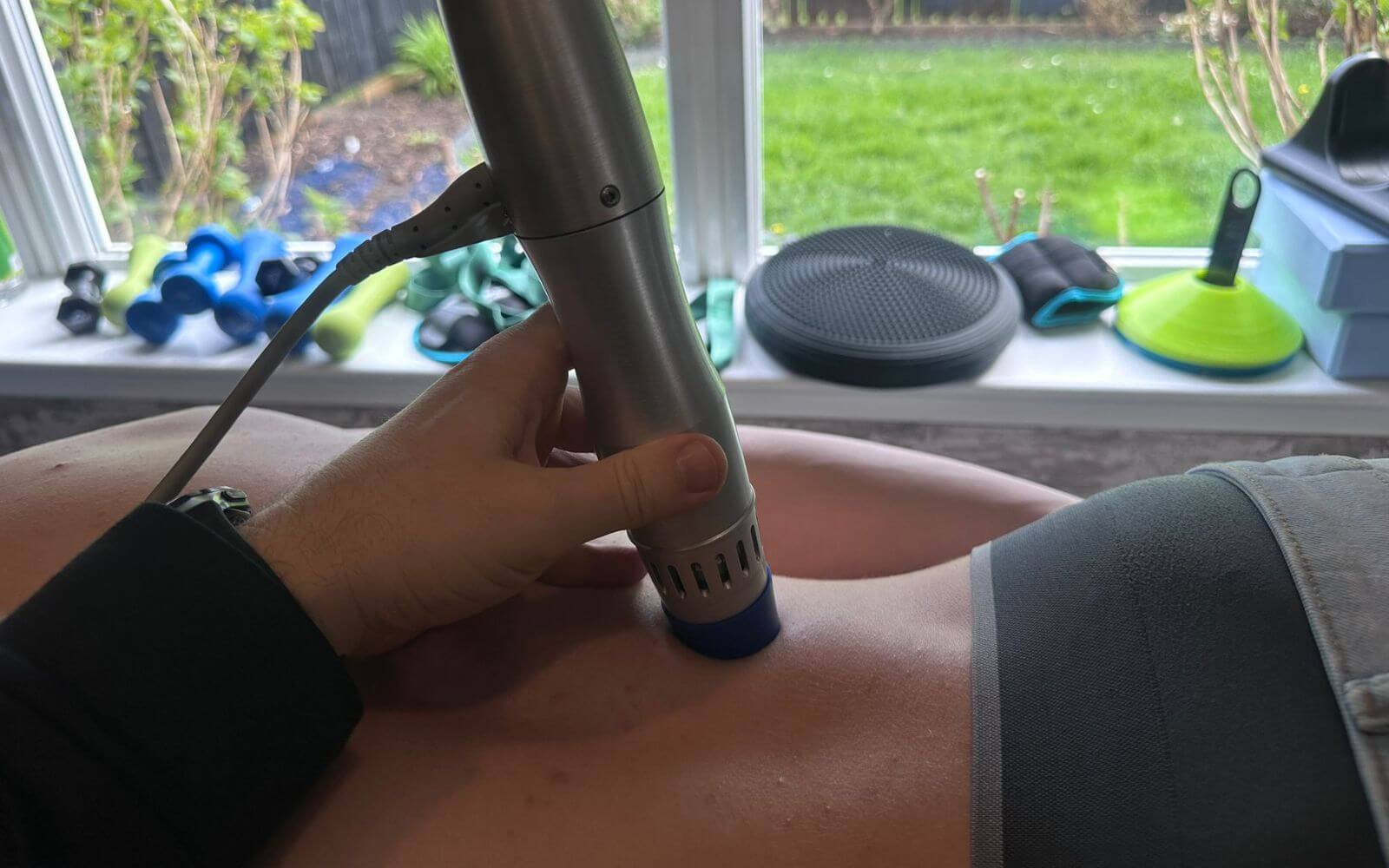
Shockwave therapy uses pressure waves – similar to sound waves – that travel deep into your tissue. A handheld device delivers these pulses directly to the problem area. You’ll feel a strong tapping or pulsing sensation, and yes, it can be uncomfortable, but most people handle it just fine.
The technology has been around for decades. Doctors originally used it to break up kidney stones without surgery. Then someone clever noticed it also helped heal soft tissue injuries – and shockwave therapy for musculoskeletal problems was born.
At Peter’s Physiotherapy, I use shockwave as part of a complete treatment approach. It’s not a replacement for hands-on therapy and exercises – it’s an extra tool that can make a real difference for the right problems.
How Does Shockwave Therapy Actually Work?
When those pressure waves hit your tissue, several things happen:
It Kickstarts Healing: Shockwave creates controlled micro-trauma in the tissue. That sounds bad, but it’s actually what you want. Your body responds by sending more blood, more nutrients, and more healing cells to the area. Injuries that have been stuck suddenly start healing again.
It Breaks Down Problem Tissue: Scar tissue, calcifications, and adhesions can all block proper healing. Shockwave helps break these down so healthy tissue can form instead.
It Reduces Pain: The waves affect how pain signals travel to your brain. Many people notice pain relief that lasts well beyond the treatment session.
It Stimulates Collagen Production: Collagen is what your tendons and ligaments are made of. Shockwave encourages your body to produce more of it, which means stronger, healthier tissue.
The key thing to understand is that shockwave works best on chronic problems – injuries that have been hanging around for weeks or months and haven’t responded to other treatments. It’s essentially waking up your body’s healing process when it’s gone to sleep.
What Conditions Can Shockwave Therapy Help?
At Peter’s Physiotherapy, I use shockwave therapy for a range of stubborn problems:
Plantar Fasciitis: That stabbing heel pain when you take your first steps in the morning? Plantar fasciitis is one of the conditions shockwave works best for. Many people who’ve suffered for months finally get relief.
Achilles Tendinopathy: Whether it’s pain at the back of your heel or higher up in the tendon, shockwave can help get things moving in the right direction. Achilles problems are notoriously slow to heal – shockwave speeds that up.
Tennis Elbow and Golfer’s Elbow: These overuse injuries can drag on for ages. If your elbow pain isn’t responding to rest and exercises, shockwave might be what you need.
Shoulder Calcifications: Calcium deposits in your rotator cuff can cause serious pain and restricted movement. Shockwave helps break down these deposits and restore normal function.
Patellar Tendinopathy: Jumper’s knee, runner’s knee – whatever you call it, that pain at the front of your knee below the kneecap can be stubborn. Shockwave often helps when other treatments haven’t.
Hip Bursitis: Pain on the outside of your hip that won’t go away? Trochanteric bursitis responds well to shockwave therapy in many cases.
Chronic Muscle Tightness: Sometimes muscles just won’t release, no matter how much stretching or massage you do. Shockwave can help break the cycle.
Wondering if shockwave might help your problem? Contact Peter’s Physiotherapy or call 07900 577659 and let’s discuss it.
How Peter’s Physiotherapy Uses Shockwave Therapy
Here’s something important – shockwave therapy on its own isn’t a magic fix. At Peter’s Physiotherapy, I never use it as a standalone treatment. It’s part of a complete approach that includes proper assessment, hands-on therapy, and targeted exercises.
Here’s how it works:
First, we figure out exactly what’s going on. Not every stubborn pain needs shockwave – sometimes other approaches work better. I’ll assess your problem thoroughly and recommend shockwave only if I genuinely think it’ll help.
If shockwave is right for you, we’ll combine it with other treatments. You might have some manual therapy before or after the shockwave session. You’ll definitely get exercises to do at home. The shockwave kickstarts healing, but the other work makes sure it sticks.
I’ll also be honest with you about expectations. Shockwave doesn’t work for everyone, and some conditions respond better than others. At Peter’s Physiotherapy, you’ll always get straight talk about what’s realistic for your situation.
Your First Shockwave Session
Nervous about what to expect? Don’t be. When you come to Peter’s Physiotherapy for shockwave therapy, I’ll explain everything before we start.
First, I’ll apply some gel to the treatment area – same stuff used for ultrasound scans. Then I’ll use the shockwave handpiece to deliver pulses to the problem area. A typical session involves around 2,000-3,000 pulses, which takes about 5-10 minutes.
What does it feel like?
Honestly? It’s uncomfortable. Most people describe it as a strong tapping or pulsing sensation. Some areas are more sensitive than others – heels and elbows tend to be spicier than bigger muscle areas. But it’s completely manageable, and I’ll adjust the intensity based on what you can handle.
The good news is that each session gets easier. As your tissue starts healing, it becomes less sensitive to the treatment.
After your session, the area might feel a bit sore or achy – like you’ve had a deep massage. This usually settles within a day or two. Some people feel immediate relief, others notice gradual improvement over the following weeks.
How Many Sessions Will You Need?
Everyone’s different, but here’s what typically happens at Peter’s Physiotherapy:
Most conditions need 3-6 shockwave sessions for best results. Sessions are usually spaced one week apart to give your body time to respond. You might notice improvement after the first session, but the real benefits build up over the course of treatment. Some people need a second round of sessions a few months later.
I’ll reassess your progress as we go. If shockwave isn’t helping after a few sessions, we’ll adjust the approach rather than just continuing blindly.
Is Shockwave Therapy Right for You?
Shockwave works best for:
Chronic problems that have been around for at least 6 weeks. Tendon issues like Achilles, plantar fascia, tennis elbow. Conditions that haven’t responded to rest, exercises, or other physio. People who want to avoid surgery or injections.
Shockwave might not be suitable if:
You’re pregnant. You have a blood clotting disorder or take blood thinners. You have a pacemaker. The treatment area has an open wound or infection. You have certain nerve conditions.
Don’t worry – I’ll go through all of this with you before we start any treatment. At Peter’s Physiotherapy, your safety always comes first.
Common Questions About Shockwave Therapy
Does shockwave therapy hurt? It’s uncomfortable during the treatment, but most people tolerate it well. I’ll adjust the intensity to keep it manageable. The discomfort only lasts while the treatment is happening – usually about 5-10 minutes.
How soon will I feel results? Some people notice improvement immediately, but for most, it’s a gradual process over several weeks. The full benefits often appear 6-12 weeks after completing treatment.
Can I exercise after shockwave? Yes, but I’ll give you specific guidance. Light activity is usually fine, but you might need to avoid high-impact exercise for a day or two after each session.
Is there any downtime? Not really. You can go straight back to normal activities after your session. The treated area might be a bit sore, but nothing that should stop you doing everyday things.
Why hasn’t my doctor mentioned shockwave? Many GPs aren’t familiar with shockwave therapy or don’t have access to it. It’s more commonly offered by physiotherapists and sports medicine specialists.
Is shockwave better than cortisone injections? They work differently. Injections can give quick relief but don’t fix the underlying problem. Shockwave takes longer but addresses the root cause. For many chronic tendon problems, shockwave is now considered a better long-term option.
Stop Living with Stubborn Pain
If you’ve been suffering with pain that just won’t go away – heel pain, elbow pain, Achilles problems, shoulder issues – you don’t have to accept it as normal. Shockwave therapy might be the breakthrough you need.
At Peter’s Physiotherapy, I’ve helped many Glasgow residents finally get rid of chronic pain that hadn’t responded to anything else. Combined with proper physiotherapy, shockwave can get you back to doing the things you love without constant discomfort.
Book Your Shockwave Therapy Consultation Today
Book Online: Visit the booking page
Phone or Text: 07900 577659
Email: contact@petersphysiotherapy.co.uk
Contact Page: petersphysiotherapy.co.uk/contact
Let’s find out if shockwave therapy is right for your problem. At Peter’s Physiotherapy in Glasgow, relief from stubborn pain is closer than you think.