


Football, running, the gym, golf, cycling. Whatever you play, the injuries usually come down to the same handful of problems that bring people in for sports physiotherapy in Glasgow. A hamstring that goes during a game of football with your mates. A knee that starts complaining once you build the miles up. A shoulder that's not been right since you started lifting heavier. An ankle you rolled months ago that still doesn't feel solid.
That's what I deal with all week. I'm a chartered physiotherapist, HCPC registered, and I treat sports injuries one-to-one at my clinic in north-east Glasgow. Same person every appointment, from the first assessment through to the day you're back playing.
The NHS treats all of this too, just not quickly. NHS Greater Glasgow & Clyde is currently quoting around 18 weeks for a routine musculoskeletal appointment. If you're mid-season, that's your season gone. That's why most of my sports patients come privately, and they're usually seen within a few days.
Below: what I treat, how I treat it, what it costs, and how to check I'm actually qualified before you book anything.
The sports injuries I treat most often
Most sports injuries come back to the same handful of problems. These are the ones that walk through my door most weeks.
| Injury | What's usually going on | Who gets it |
|---|---|---|
| Runner's knee (patellofemoral pain) | Pain around or under the kneecap, usually from doing too much too soon | Runners, cyclists, gym-goers |
| Achilles tendinopathy | Pain and stiffness in the Achilles. Builds up gradually rather than happening all at once | Runners, footballers, racquet sports |
| Hamstring strain | A pulled or torn hamstring, usually from sprinting or overstretching it | Football, rugby, sprinting |
| Ankle sprain | Stretched or torn ligaments after rolling or twisting it | Almost any sport with turning or jumping |
| Shin splints | Pain down the shin from repeated impact, often after upping your mileage too fast | Runners, people just getting started |
| Tennis and golfer's elbow | Tendon pain on the outside or inside of the elbow from repeated loading | Racquet sports, golf, climbing |
| Shoulder and rotator cuff pain | Shoulder pain from overload, common with anything overhead | Swimming, throwing, gym work |
| Lower back pain | Back pain from lifting, twisting or repetitive loading in sport | Weightlifting, rowing, most field sports |
Runners get the worst of it. The research shows about 80% of running injuries come from overuse rather than one bad moment, and the knee is the most commonly injured area, followed by the calf and the ankle. That matches what I see.
Your problem not on the list? Still worth asking. Nearly everything sport-related comes down to muscles, joints or tendons, and that's what physio is for. The main thing is not to sit on it for months. Overuse injuries get harder to shift the longer you leave them, not easier.
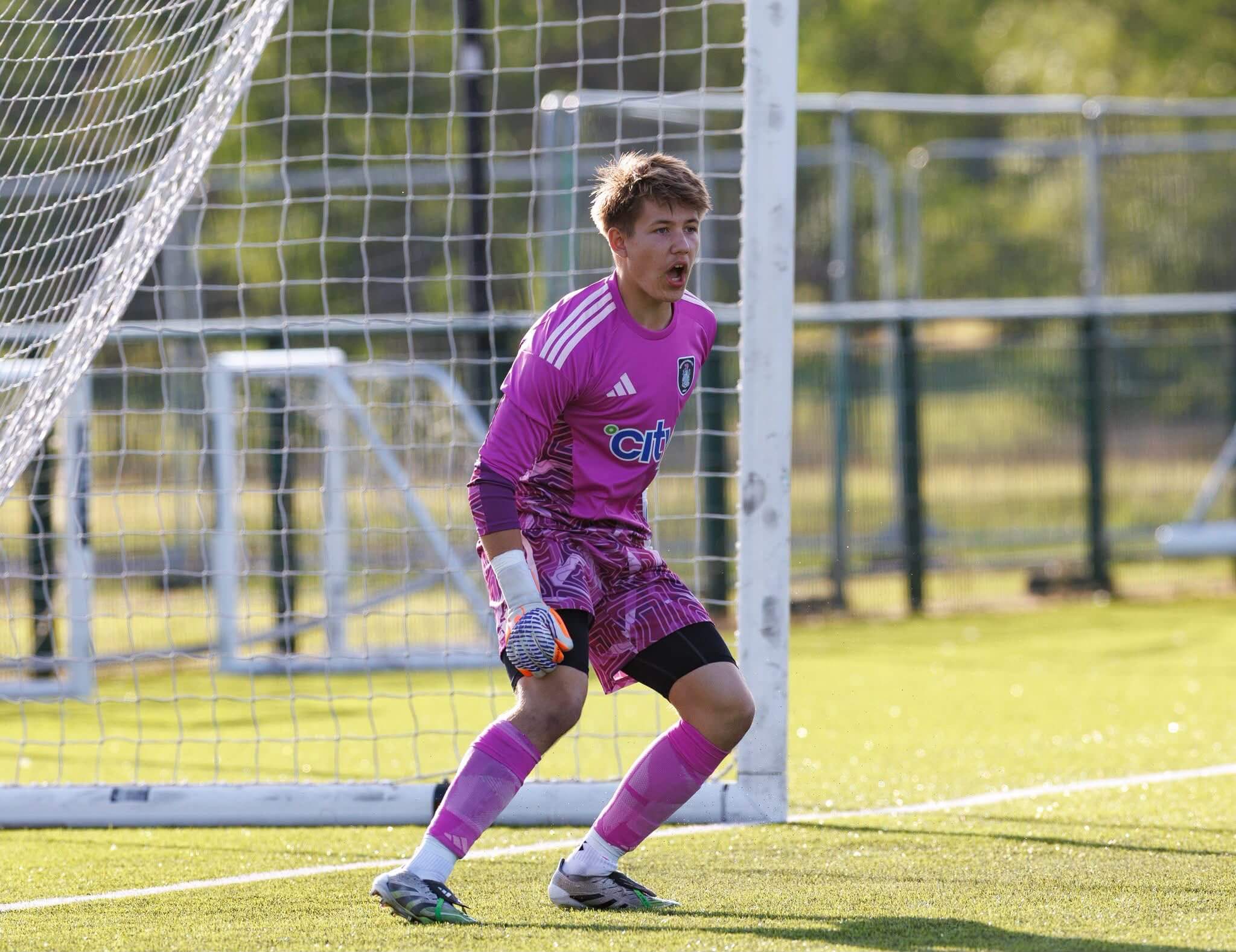
How I treat sports injuries
Every first appointment starts the same way. What happened, what makes it worse, and then a proper hands-on and movement check to work out what's actually causing the pain. Then we get on with treating it.
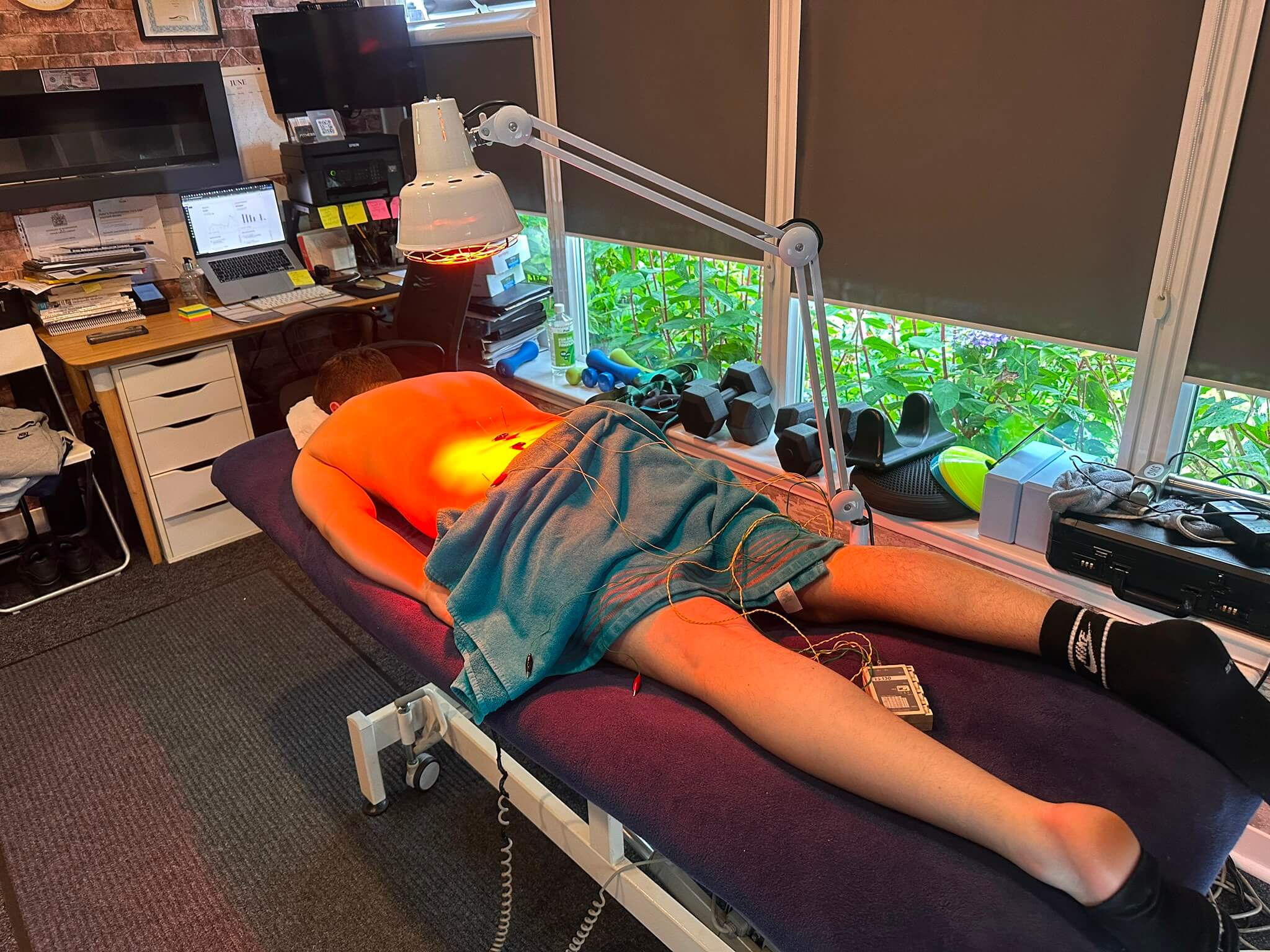
Sessions are a full hour, and I use whatever the injury needs instead of charging separately for each technique. Depending on what's wrong, that usually means some mix of:
- Hands-on manual therapy to settle the pain and get the joint or muscle moving again.
- Rehab exercise and progressive loading. This is the part that actually fixes most injuries. Tendons especially need loading, not rest, and you'll get a plan to work on between sessions.
- Shockwave therapy for stubborn tendon pain (more on that below).
- Medical acupuncture and dry needling for pain and muscle tension.
- Kinesio taping to support things while you get back to training.
- Soft tissue work, including instrument-assisted (IASTM) and myofascial release for tight, restricted tissue.
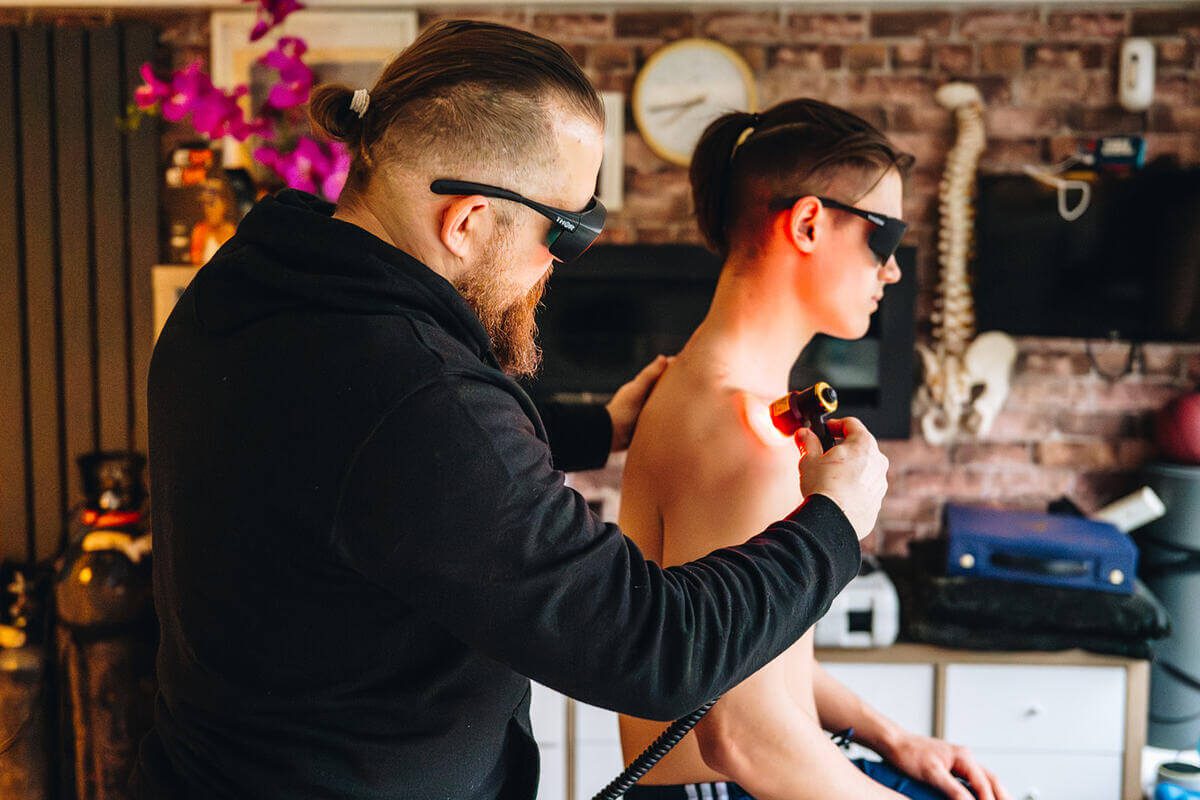
- Laser therapy as an extra for pain and healing.
I'm not just trying to make it feel better for a couple of days. The job is getting you back to your sport and sorting out whatever caused the problem, so you're not back in six weeks with exactly the same thing.
Shockwave therapy for tendon injuries, honestly
Shockwave gets sold as a miracle cure, so here's the honest version. The evidence is genuinely strong for plantar fasciitis. For Achilles and other tendon problems it helps too, and it works better alongside loading exercises than it does on its own. It's not magic. But for tendon pain that hasn't shifted with rest and exercise, it's one of the better things available, and I'll tell you straight if I don't think it'll do much for your particular problem.
My sports physiotherapy training and qualifications
You're trusting me with an injury, so here's what sits behind all of the above. The certificates are scanned on my about page, and you can check my registration on the HCPC register in about a minute. Search "Krzeminski".
| Qualification / course | Provider | Year |
|---|---|---|
| HCPC-registered physiotherapist | Health and Care Professions Council | current |
| Member of the Chartered Society of Physiotherapy (no. 080645) | CSP | since 2008 |
| Manual Therapy & Mobilisation Techniques and Their Safe Applications, peripheral areas (9 hrs CPD) | Sports Therapy Scotland | 2019 |
| Spinal Manipulation & Mobilisation Master-Class (7 CPD points) | John Gibbons, Bodymaster Method® | 2026 |
| Diploma programme Modules A-C: cervical spine & upper limb, lumbar spine & lower limb, thoracic spine & sacro-iliac joint (80 hrs tuition) | The Society of Orthopaedic Medicine, QMU Edinburgh | 2012 |
| Acupuncture in Physiotherapy, Certificate of Needling Competency (Western medical acupuncture for musculoskeletal pain) | AACP-accredited course | |
| Kinesio Taping Fundamental & Advanced, KT1 & KT2 (16 hrs) | Kinesio Taping Association International | 2015 |
| Instrument-Assisted Massage Tools seminar (IASTM) | IAM Tools Ltd | 2013 |
| Myofascial Release Techniques (12 hrs) | Cardonald College Glasgow | 2011 |
| THOR Laser Therapy Course, low-level laser & LED therapy (8 hrs CPD) | THOR Photomedicine | 2013 |
| Pilates Matwork Level 1 (16 hrs) | APPI, Australian Physiotherapy & Pilates Institute | 2013 |
That's the sport-related training. The full list, including cryotherapy and the rest of my manual therapy courses, is on the about page.
| Where | 6 Balveny Drive, G33 5BY, Glasgow |
| Google reviews | 301 · 5.0★ average (as of 02.07.2026) – check current reviews |
| Price | from £75 for 60 minutes, everything included |
| What I focus on | Sports injuries, MSK, back and neck pain, shockwave, laser, acupuncture, taping |
| Registration | HCPC registered · CSP member no. 080645 (since 2008) |
| Who treats you | Me, every visit, from assessment to discharge |
What sports physiotherapy costs in Glasgow
£75 for the hour. Assessment, hands-on treatment, shockwave, acupuncture, taping and your rehab plan are all in that, with nothing bolted on at the end. That’s about normal for Glasgow, where private sessions generally run £55-£78 and some city-centre clinics charge up to £100.
You don’t need a GP referral to book. If you’re claiming on private insurance, most insurers cover treatment with an HCPC-registered physio, but check your excess and whether they want a referral first.
Common questions about sports physiotherapy
How soon after a sports injury should I see a physiotherapist?
Sooner is better. With a fresh injury, getting it looked at in the first few days stops you making it worse and gives the clearest picture of what’s actually damaged. With a niggle that’s been building for weeks, don’t wait for it to turn into something that costs you the season.
Do I need a GP referral to see a sports physio in Glasgow?
No. You can book a private physio directly and be seen within days. The only catch is insurance: some policies want a GP referral before they’ll pay out, so check yours first.
What is the difference between a sports physiotherapist and a sports massage therapist?
A physiotherapist is a regulated healthcare professional who can assess and diagnose the injury, then treat it with the full range of methods. Sports massage is one useful technique for soft tissue, but a massage therapist doesn’t diagnose or manage the injury itself. If you’ve got an actual injury, start with a physio.
Should I put ice or heat on a sports injury?
For a fresh injury, current thinking leans towards relative rest, gentle movement and managing the load rather than icing everything aggressively. Heat suits stiff, long-standing muscle tightness better than something new. If you’re not sure which one you’ve got, that’s worth getting checked rather than guessing.
Can physiotherapy help a torn or pulled muscle?
Yes. Something like a pulled hamstring responds well: settle it down first, then build it back up with a proper strengthening and return-to-sport plan so it doesn’t just tear again. A minor strain often settles in a few weeks. A bigger tear takes longer and really needs structured rehab.
Does shockwave therapy work for tendon injuries?
For some things, yes. The evidence is strongest for plantar fasciitis, and it helps with Achilles and other tendon problems too, especially combined with loading exercises. It’s most useful for stubborn tendon pain that hasn’t responded to rest and exercise. I’ll give you an honest answer on whether it suits your case.
How many sessions will I need to recover from a sports injury?
Depends on the injury. A minor strain or sprain might take two to four. A long-standing tendon problem or a proper tear takes longer, spread over several weeks. You’ll get a realistic answer after the first assessment, and I won’t ask you to pay for a big block of sessions up front.
What should I wear to a sports physio appointment?
Loose sports gear, so I can see things move and get to the area I’m treating. If it’s a leg or ankle problem, bring shorts.
Book sports physiotherapy in Glasgow
If an injury’s keeping you off the pitch or out the gym, the quickest way back is getting it properly looked at. You’ll see me at every appointment. Prices and online booking are here, and most new patients get in within a few days.
If you want a wider look at your options first, I’ve also written an honest comparison of the best physiotherapists in Glasgow, including the clinics I’d recommend over myself for certain things.
Written by Piotr “Peter” Krzeminski, chartered physiotherapist, HCPC registered and CSP member since 2008. Last updated 02.07.2026. Sources, all linked above: NHS Greater Glasgow & Clyde MSK waiting times; American Family Physician on common running injuries; systematic review of lower limb running injuries; meta-analysis of shockwave therapy for tendinopathy and plantar fasciitis; systematic review of shockwave for Achilles tendinopathy. Review count from my public Google listing, checked 02.07.2026.