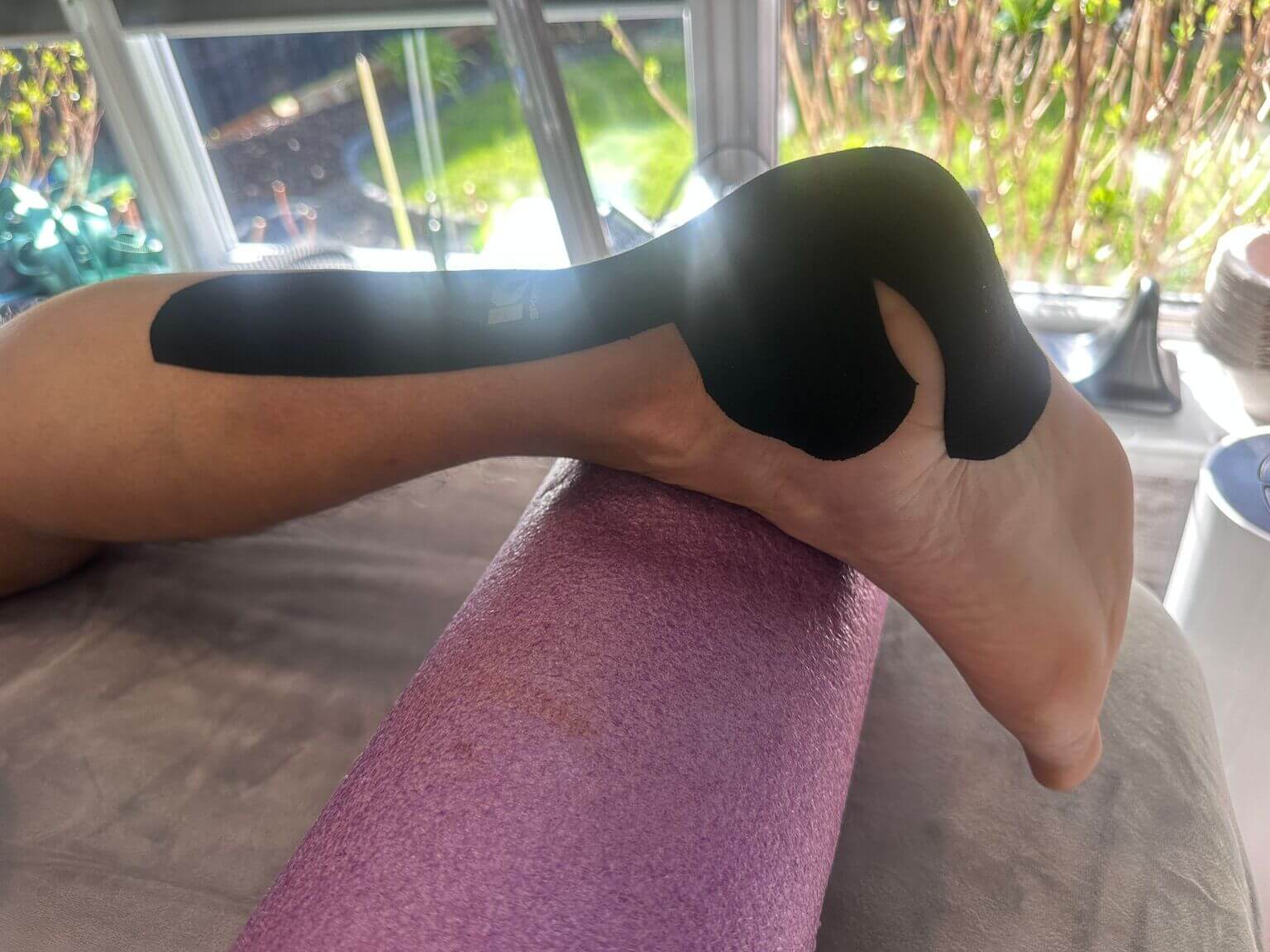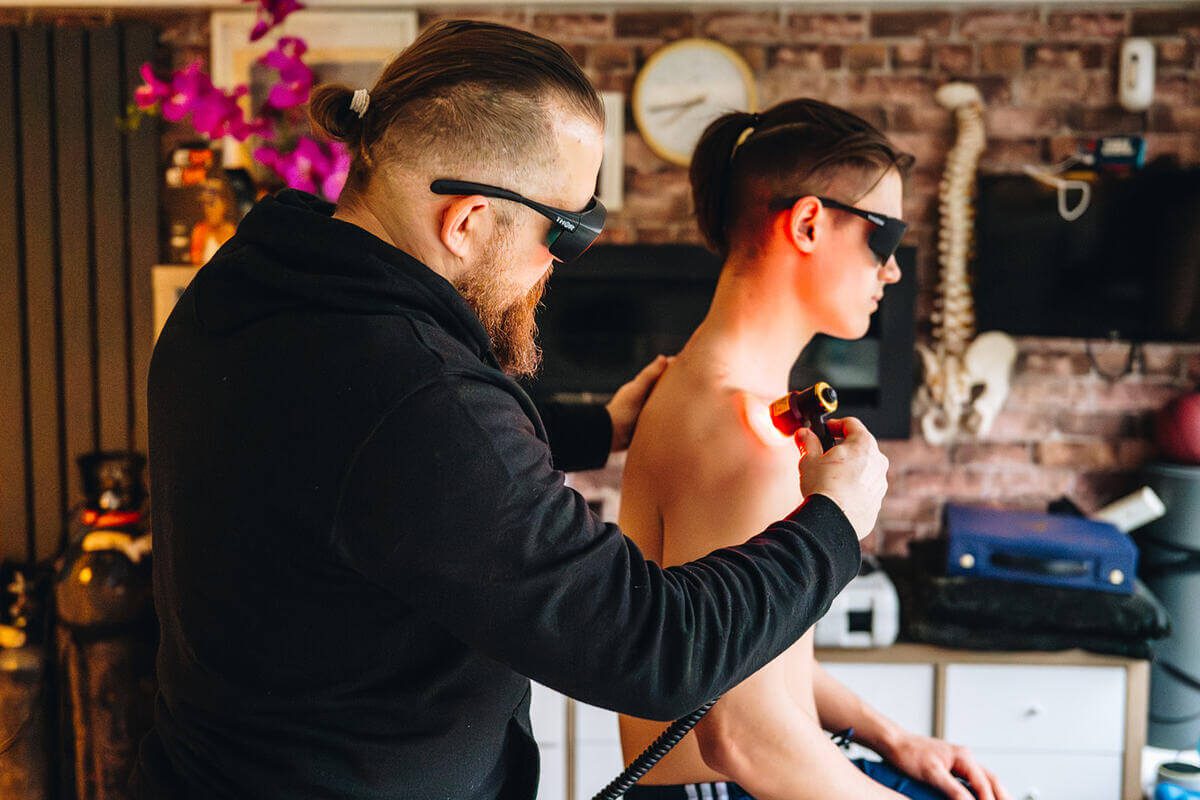



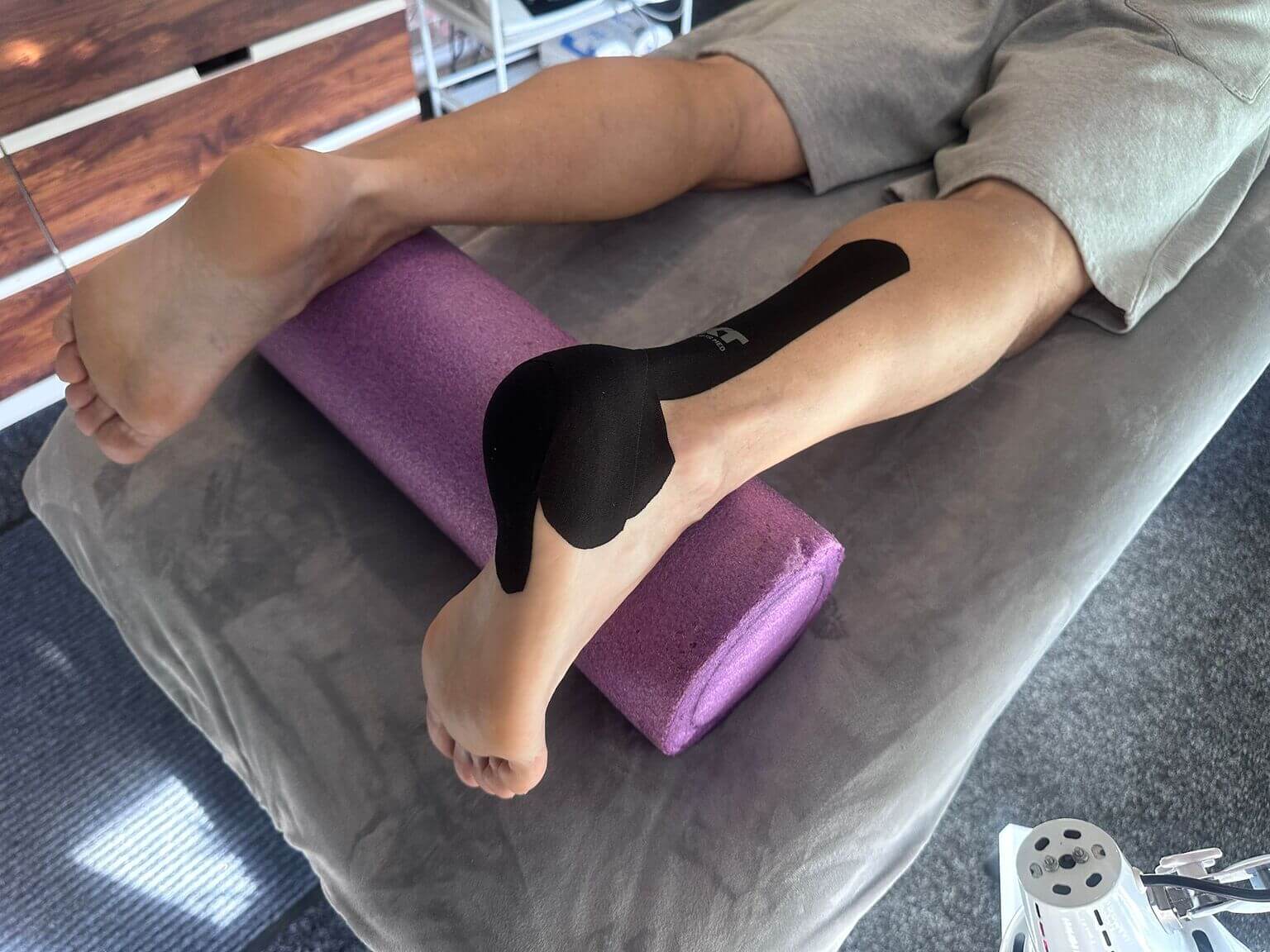
You’ve probably seen athletes covered in bright strips of tape – on their shoulders, knees, backs, even necks. Maybe you’ve wondered what it actually does, or whether it’s just for show. At Peter’s Physiotherapy in Glasgow, I use kinesiotaping regularly as part of my treatment approach. Let me explain exactly what this colourful tape is all about and how it might help you.
What Is Kinesiotape (And Why Is It So Colourful)?
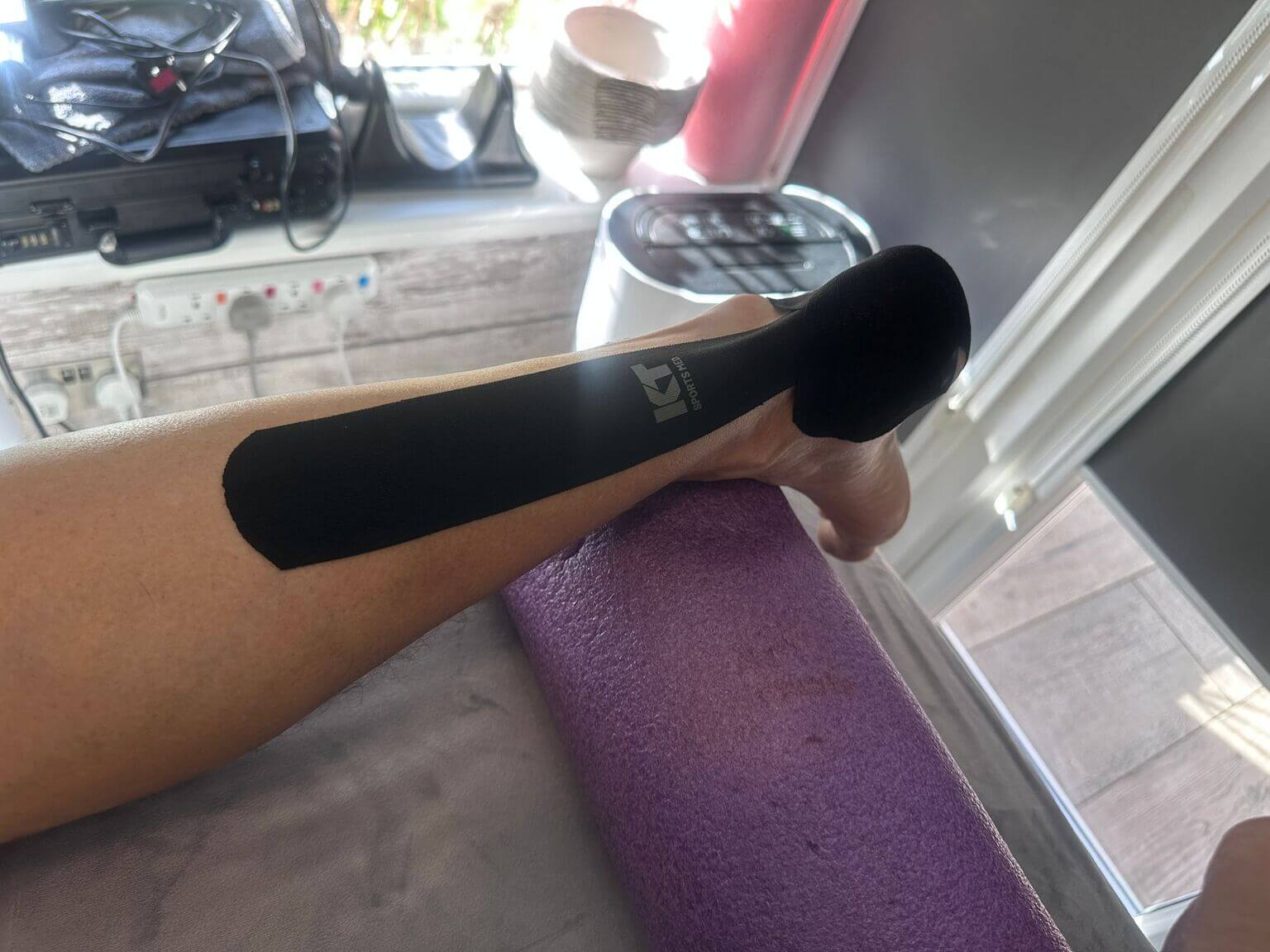
Kinesiotape is a stretchy, adhesive tape that’s applied directly to your skin. Unlike the stiff white sports tape you might remember from school, kinesiotape moves with your body. It stretches, bends, and flexes just like your skin does – which is exactly why it works so well.
As for the colours? Here’s something that might surprise you – the different colours don’t actually do different things. Pink tape works the same as blue tape, which works the same as black tape. The colours are mostly about personal preference. Some people like bright pink, others prefer something more subtle. At Peter’s Physiotherapy, I let you choose whatever colour you fancy.
That said, some practitioners follow colour therapy principles – using warm colours like red and pink for stimulation, and cool colours like blue for calming. Whether that makes a real difference is debatable, but if believing in it helps you feel better, I’m all for it.
How Does Kinesiotape Actually Work?
When I apply kinesiotape, several things happen:
It Lifts Your Skin Slightly: The tape creates microscopic spaces between your skin and the tissues underneath. This might sound small, but it reduces pressure on pain receptors and improves blood and lymph flow. Less pressure often means less pain.
It Supports Without Restricting: Unlike rigid tape that locks everything in place, kinesiotape gives your muscles and joints support while still allowing full movement. You can bend, stretch, and move normally – the tape moves with you.
It Provides Sensory Feedback: Your skin is covered in nerve receptors. When tape is applied, it constantly sends signals to your brain about your body position. This improved awareness helps you move better and can actually reduce pain signals.
It Reduces Swelling: The lifting effect helps drain fluid from swollen areas. This is why you’ll often see kinesiotape used after injuries where bruising and swelling are problems.
What Conditions Can Kinesiotaping Help?
I use kinesiotaping for a wide range of problems:
Muscle Pain and Tension: Whether it’s a tight neck from computer work or sore shoulders from the gym, kinesiotape can help relax overworked muscles and reduce discomfort.
Joint Support: Knees, ankles, shoulders, elbows – kinesiotape provides gentle support without the bulk of traditional bracing. Great for when you need to keep moving but want some extra stability.
Swelling and Bruising: After injuries or surgery, kinesiotape helps drain excess fluid and speed up healing. The distinctive fan-shaped patterns you sometimes see are specifically designed for lymphatic drainage.
Posture Correction: Strategic taping can remind your body to sit and stand properly. It’s like having a gentle nudge telling you to straighten up – without me nagging you constantly.
Sports Performance: Many athletes use kinesiotape not just for injuries, but to support muscles during intense activity. It can help prevent problems before they start.
Wondering if kinesiotaping might help your problem? Contact Peter’s Physiotherapy or call 07900 577659 and let’s discuss it.
Does Kinesiotaping Actually Work?
Let me be honest with you – the research on kinesiotaping is mixed. Some studies show significant benefits, others show minimal effects beyond placebo. This is pretty normal for many physiotherapy treatments, by the way.
What I can tell you from 20+ years of clinical experience is this: many of my patients find kinesiotaping genuinely helpful. They report less pain, better movement, and faster recovery when we include it as part of their treatment.
The key word there is “part of.” I never use kinesiotaping alone. It’s one tool in the toolbox, combined with hands-on treatment, exercises, and proper rehabilitation. The tape supports what we’re doing – it doesn’t replace it.
How Long Does Kinesiotape Stay On?
Good quality kinesiotape typically lasts 3-5 days, even through showers, sweating, and normal daily activities. It’s designed to be water-resistant and breathable, so you can carry on with life as normal.
When it starts peeling at the edges, it’s time to take it off. Don’t try to stick it back down – by that point, it’s done its job.
Can Anyone Use Kinesiotape?
Most people can use kinesiotape safely, but there are some exceptions:
Skin Sensitivity: If you have very sensitive skin or allergies to adhesives, kinesiotape might cause irritation. We can do a small test patch first if you’re unsure.
Broken Skin: Never apply tape over cuts, wounds, or damaged skin. Wait until everything’s healed.
Certain Medical Conditions: If you have diabetes, circulation problems, or are taking blood thinners, let me know before we use kinesiotape. It’s usually still fine, but I need to know your full picture.
Pregnancy: Kinesiotaping can actually be brilliant for pregnancy-related back pain and swelling, but certain areas need to be avoided. Always tell your physio if you’re pregnant.
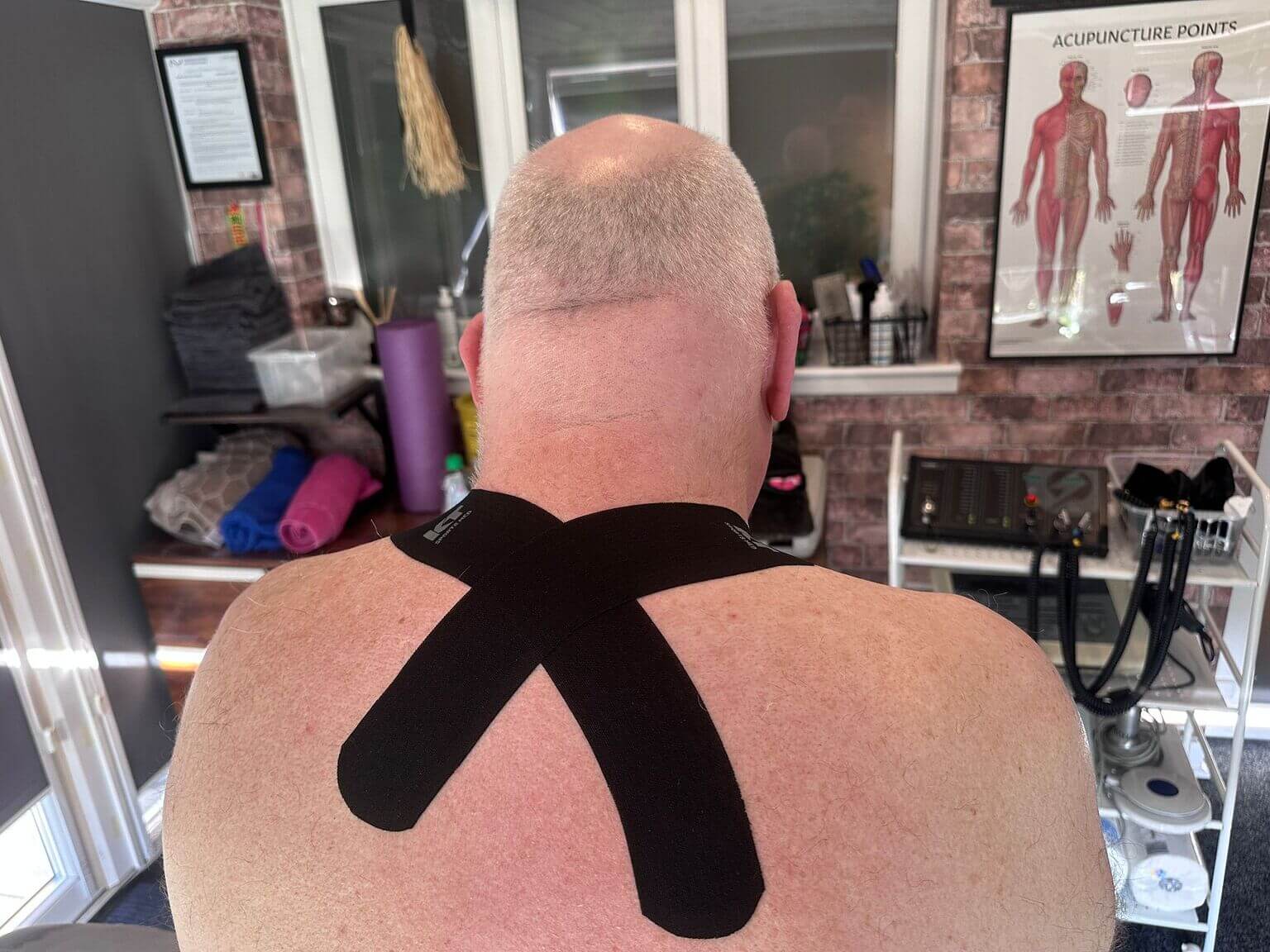
Why Proper Application Matters
You can buy kinesiotape online and try to apply it yourself – plenty of people do. But here’s the thing: how the tape is applied makes a massive difference to whether it works.
The direction of application, the amount of stretch, the shape of the cut, where it starts and ends – all of these affect the outcome. Apply it wrong and you might get no benefit at all, or even make things worse.
I’ve spent years learning and refining taping techniques. When you come in, you get tape applied properly, for your specific problem, as part of a complete treatment plan. That’s very different from watching a YouTube video and hoping for the best.
What to Expect at Peter’s Physiotherapy
If I think kinesiotaping will help your condition, I’ll explain why and show you exactly what I’m going to do. The application itself takes just a few minutes – it’s quick and painless.
You’ll leave with clear instructions: how long to keep it on, what to watch for, and when to remove it. If it starts itching badly or causing any problems, you can always take it off early – no harm done.
Kinesiotaping is included as part of your treatment session at Peter’s Physiotherapy. There’s no extra charge for the tape – it’s just part of giving you the best possible care.
Ready to Try Kinesiotaping?
Whether you’re dealing with muscle pain, recovering from injury, or just curious about whether those colourful strips might help you – I’m happy to discuss it. At Peter’s Physiotherapy, we’ll work out what combination of treatments will get you feeling better fastest.
Book Your Appointment Today
Book Online: Visit the booking page
Phone or Text: 07900 577659
Email: contact@petersphysiotherapy.co.uk
Contact Page: petersphysiotherapy.co.uk/contact
Let’s find out what’s causing your pain and fix it – with or without the colourful tape. At Peter’s Physiotherapy in Glasgow, better movement is just one appointment away.